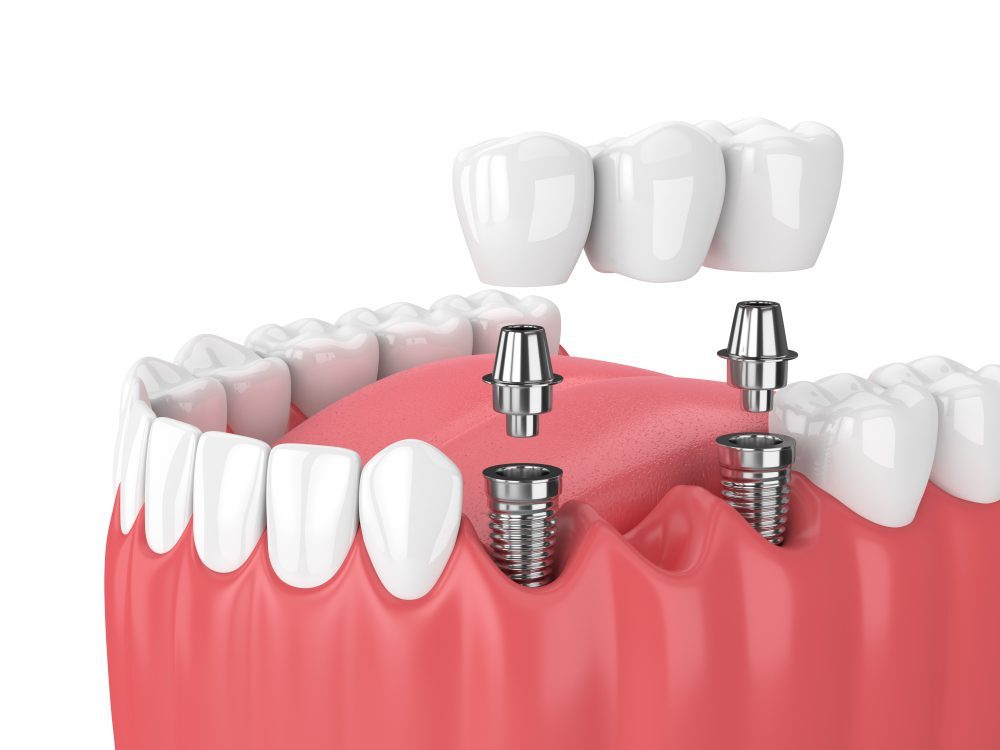
Depending on your specific needs, we can use individual implants for each missing tooth, or implant-supported bridges to replace several teeth at once.
Which route suits you depends on how many teeth are missing, where they are, and the condition of the bone underneath. We evaluate your oral health, discuss your goals and explain the options at your consultation.
-
- Individual implants
- an implant and crown for each missing tooth
-
- Implant bridge
- replaces several missing teeth at once
-
- Implant denture
- for a larger number of missing teeth
-
- Anchored
- implants are anchored in the jawbone
Your options
Ways to replace several teeth
-
Individual implants
One implant and crown for each missing tooth.
-
Implant-supported bridge
A bridge carried on implants, replacing several missing teeth at once.
-
Implant-supported denture
Where a larger number of teeth are missing, a denture supported by implants restores the arch.
-
Full-arch restoration
If most of the arch is gone, All-on-4 or All-on-X replaces the whole set on four to six implants.
Related care
Where to go next
Common questions
Questions about multiple implants
Not necessarily. Depending on your specific needs, we can use individual implants for each missing tooth, or implant-supported bridges or dentures to replace several teeth at once.
Yes. Implants can support individual crowns, bridges or dentures, and that versatility is one of their main advantages.
Good candidates have healthy gums, adequate bone density to support the implants, and are committed to good oral hygiene. Certain health conditions may affect eligibility, which we review at your consultation.
After placement there is a healing period of 3–6 months while the implants fuse with the bone. The exact timeline varies with bone density and overall oral health.
New patients
New patients are welcome
Your first visit begins with a thorough examination to assess your dental health and discuss your concerns and goals.